Blogs

NB Entrepreneurs

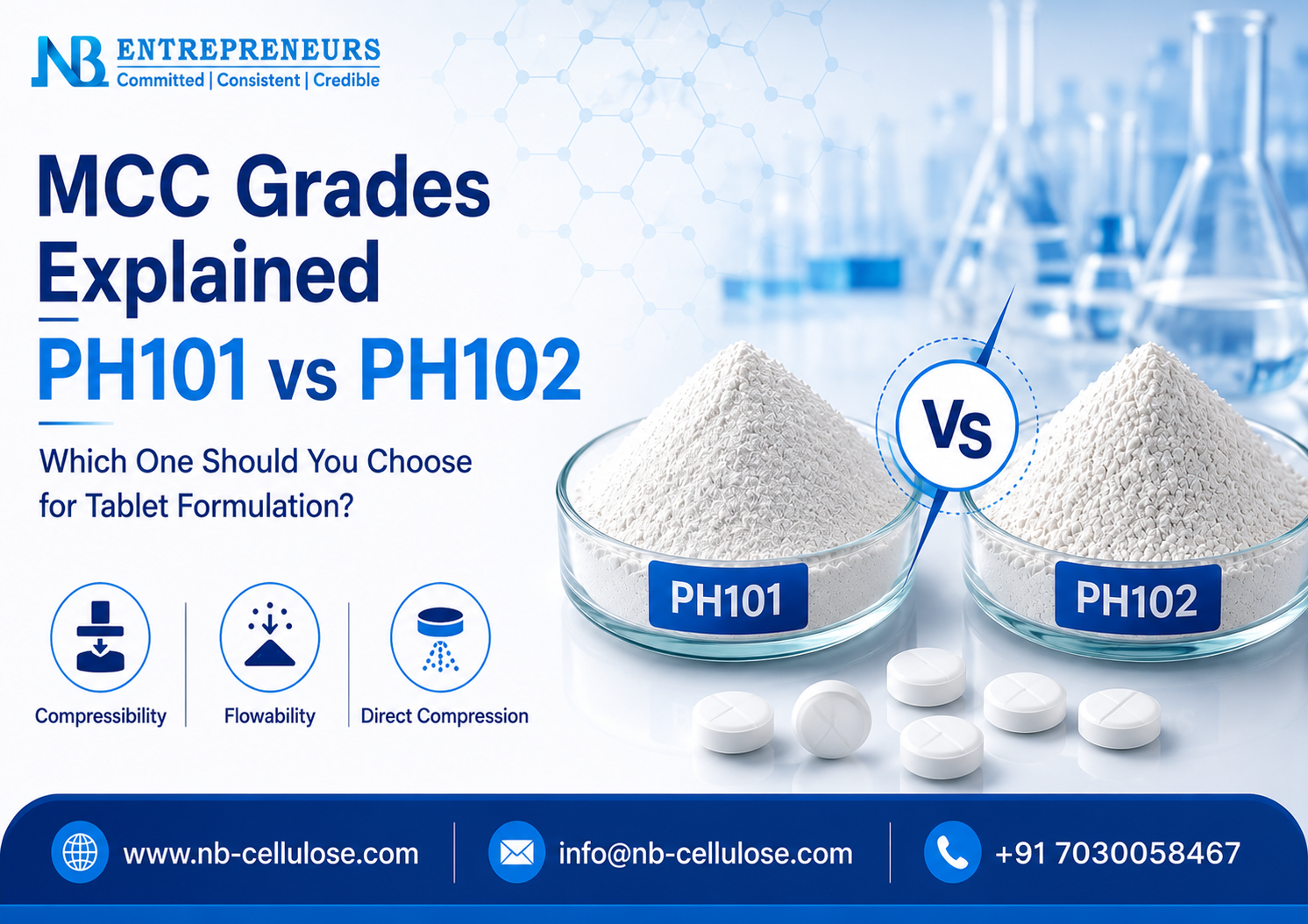
PH101 vs PH102 MCC GRADES

PH101 vs PH102: Which Microcrystalline Cellulose (MCC) Grade Should You Choose for Tablet Formulation?

Compare PH101 vs PH102 to understand key differences and applications, and choose the right microcrystalline cellulose grade for tablet formulation.

+ Read More
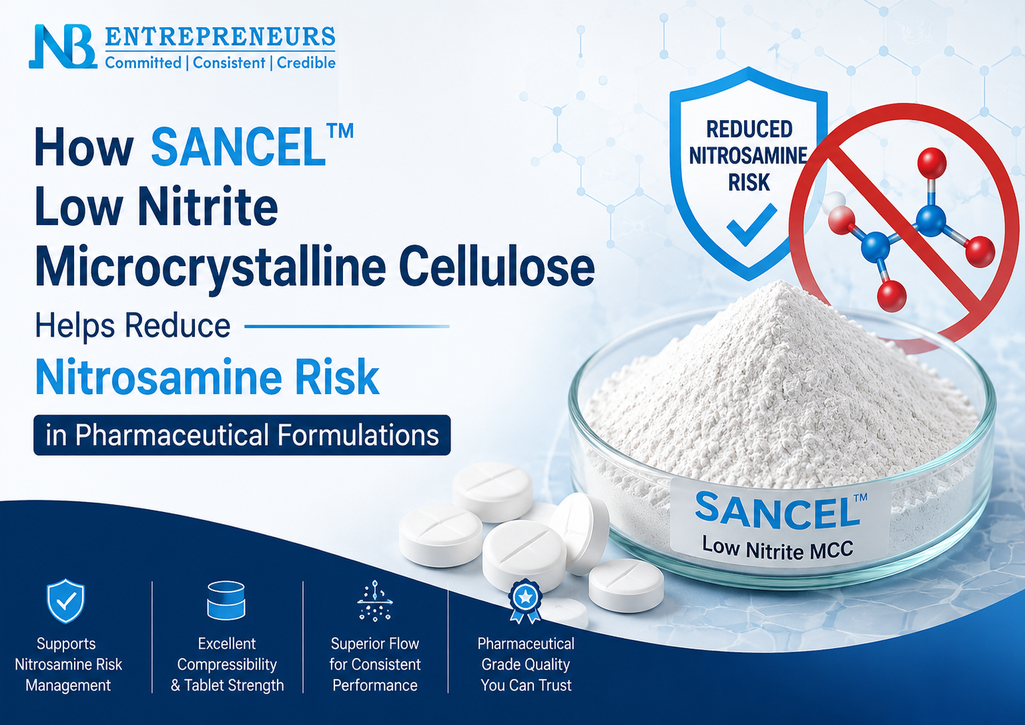
SANCEL™ Low Nitrite Microcrystalline Cellulose helping reduce nitrosamine risk in pharmaceutical formulations through safer excipient selection, improved tablet performance, and regulatory compliance.

How SANCEL™ Low Nitrite Microcrystalline Cellulose Helps Reduce Nitrosamine Risk in Pharmaceutical Formulations

Discover how SANCEL™ Low Nitrite Microcrystalline Cellulose helps reduce nitrosamine risk while delivering reliable performance for pharmaceutical formulations.

+ Read More
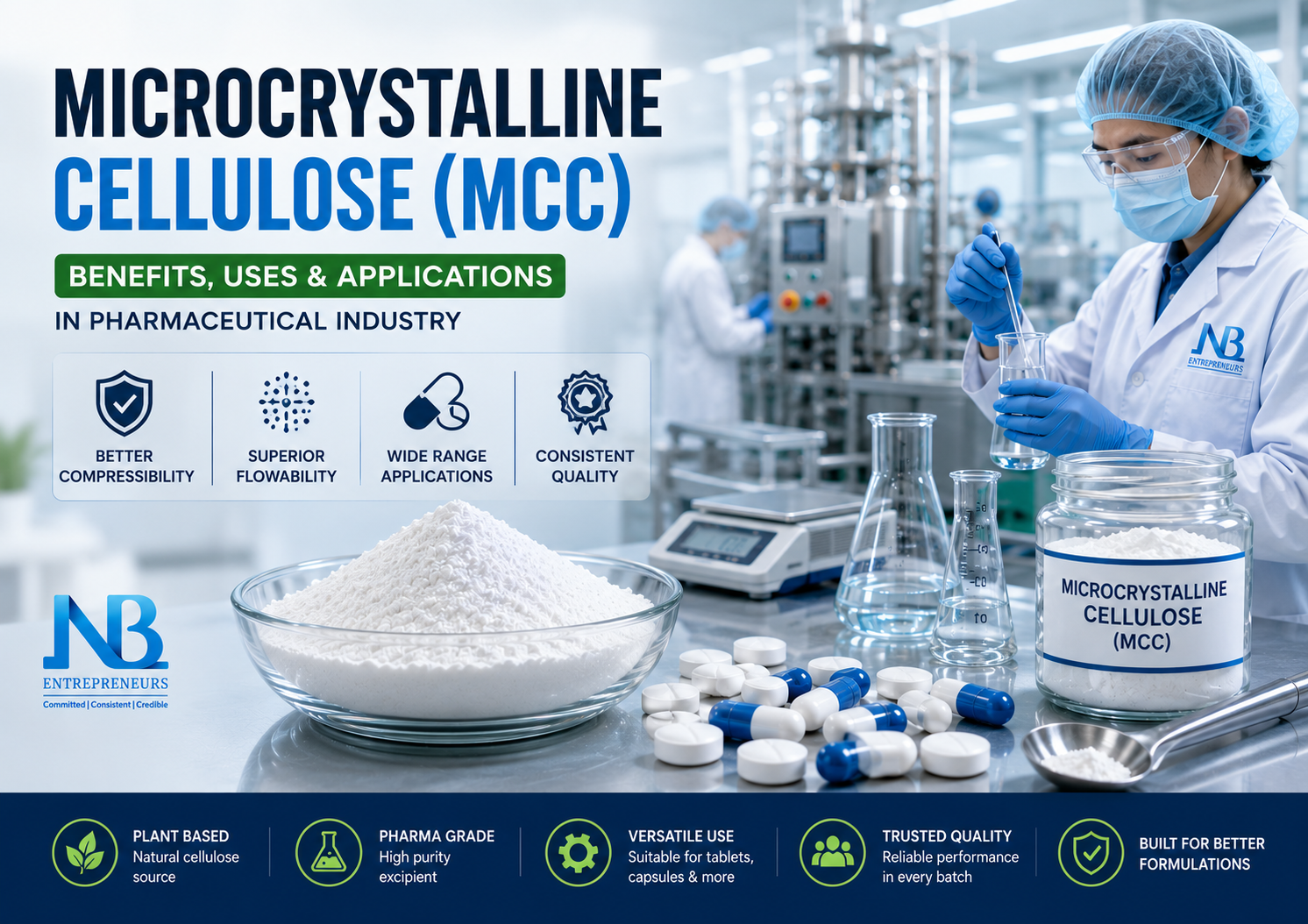
What is Microcrystalline Cellulose Know Benefits, Uses, & Applications in the Pharmaceutical Industry 2026 Guide

What is Microcrystalline Cellulose? Know the Benefits, Uses, & Applications in the Pharmaceutical Industry (2026 Guide)

What is Microcrystalline Cellulose (MCC) is a purified, partially depolymerised cellulose. It is obtained from natural plant fibres. It is one of the most commonly used pharmaceutical excipients used as a binder, filler, diluent and disintegrant. It aids in compression with excellent flowability and tablet stability. Its multifunctional properties make it a crucial component in […]

+ Read More
Silicified Microcrystalline Cellulose

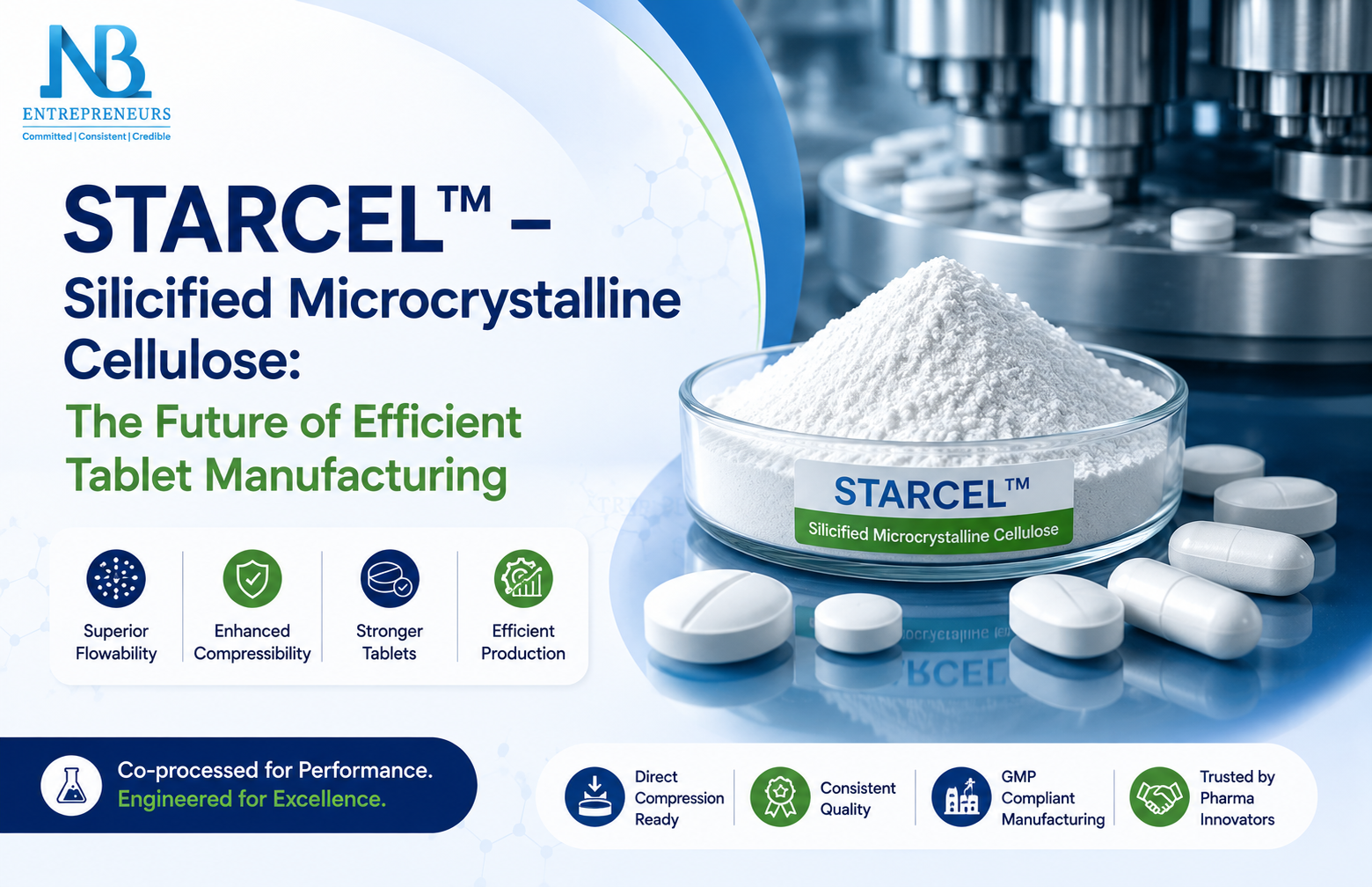
STARCEL™ – Silicified Microcrystalline Cellulose: The Future of Efficient Tablet Manufacturing

Discover STARCEL™ Silicified Microcrystalline Cellulose for improved flowability, compressibility, and direct compression in tablet manufacturing.

+ Read More
Co-Processed Excipients vs Single Excipients

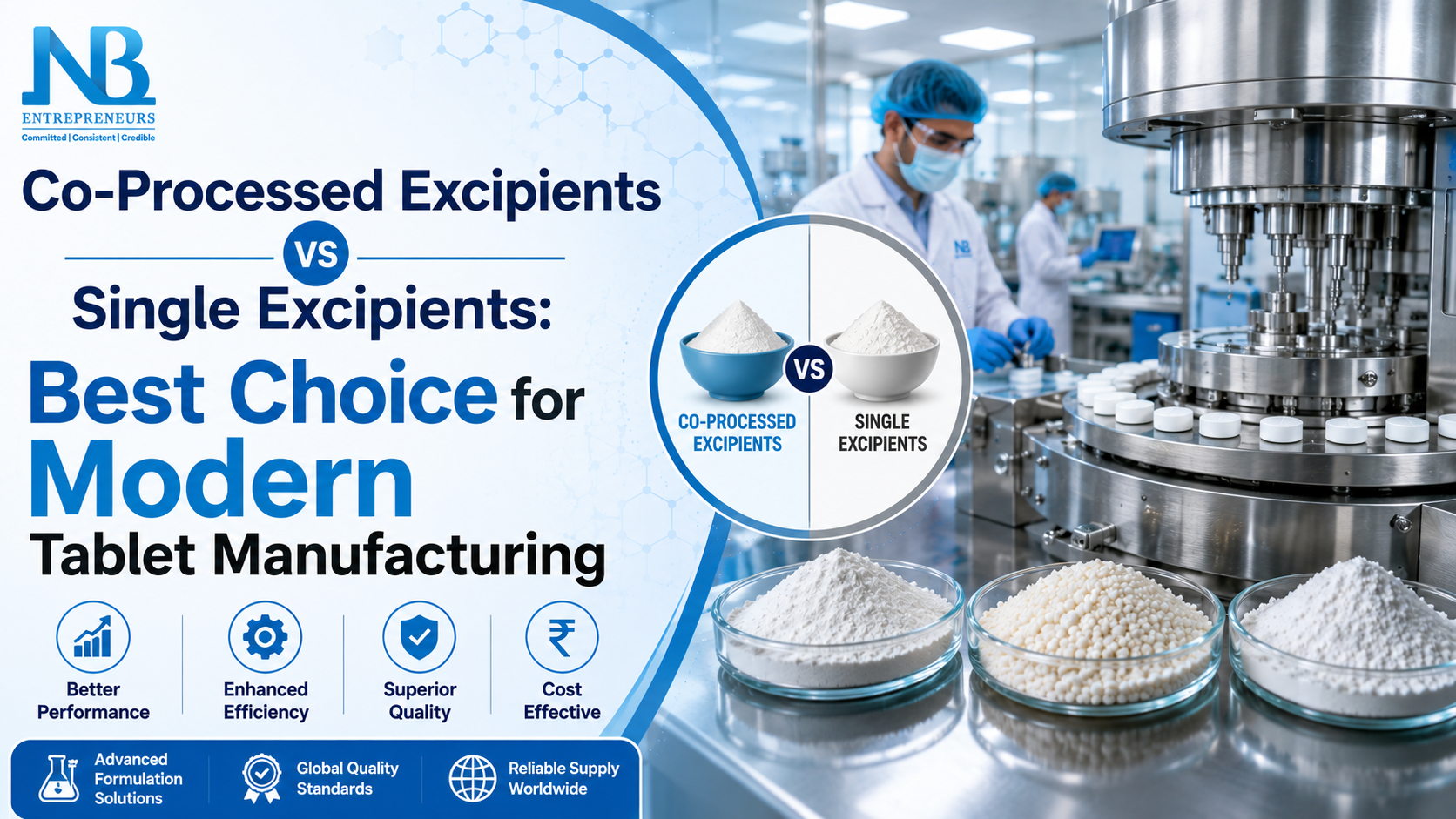
Co-Processed Excipients vs Single Excipients: Best Choice for Modern Tablet Manufacturing

Discover why Co-Processed Excipients are preferred for modern tablet manufacturing with better flowability, stability & compression performance.

+ Read More
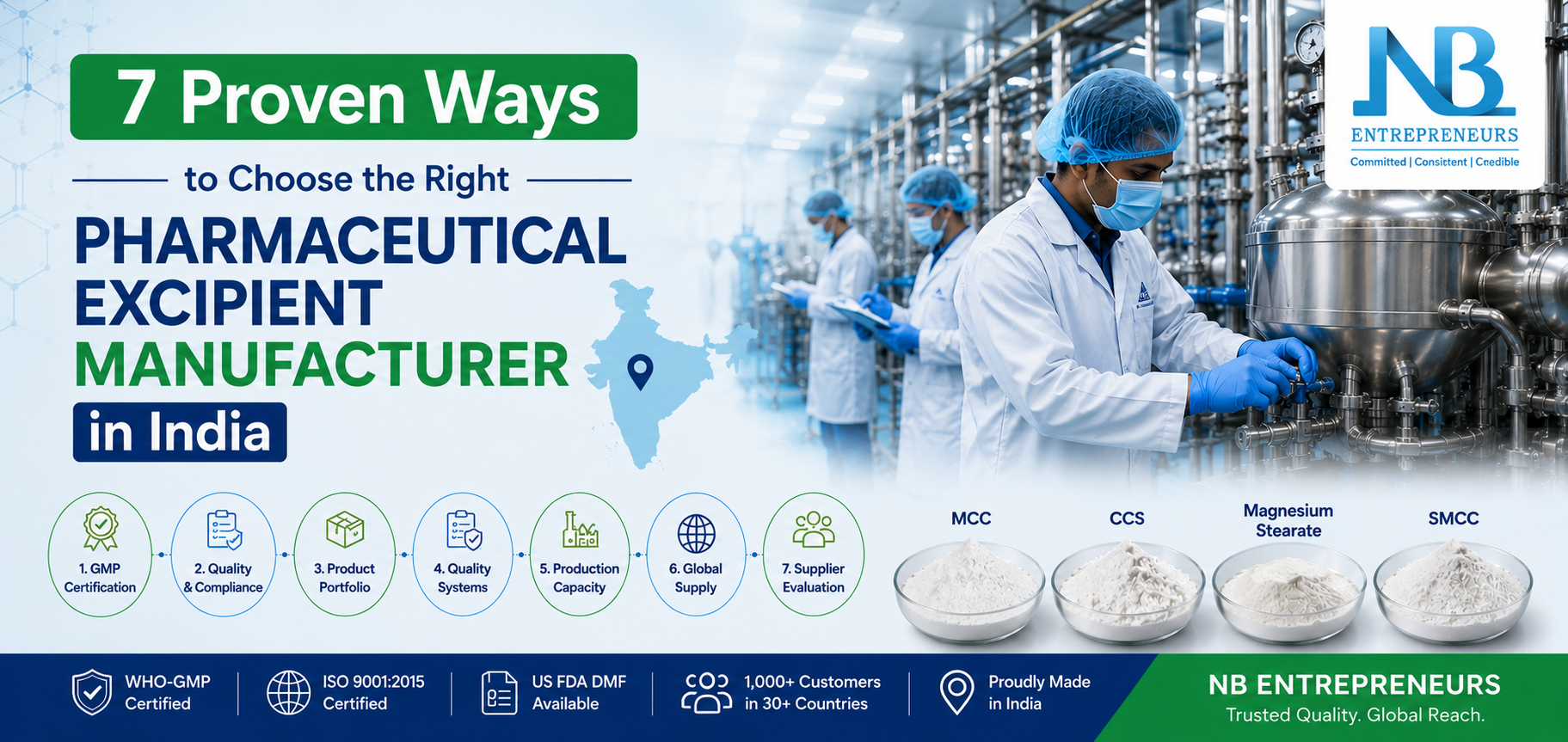
7 Proven Ways to Choose the Right Pharmaceutical Excipient Manufacturer in India

7 Proven Ways to Choose the Right Pharmaceutical Excipient Manufacturer in India

A complete buyer’s guide to choosing a pharmaceutical excipient manufacturer in India, certifications, MCC grades, red flags, key documents & 10 must-ask questions before ordering.

+ Read More

All You Need to Know About Tablet Processing

The oral route to drug administration is still the most important method of administering the drugs.  Tablets provide many benefits like; it gives protection against the temperature, humidity, light and gives the accuracy of dosage and ease of administration. Tablet processing depends on a number of formulation and process-oriented parameters. The characteristics of running powder […]

+ Read More

How to Select Excipients for Tablet Formulation

All medications are comprised of two elements the API and excipient. API is the active ingredient which is the drug and the excipients are the substances that convey the drug to the recipient. Excipients are synthetically inert substances. Pharmaceutical Excipients are pivotal to the medical industry. An excipient has no therapeutic properties. The standard reason for its existence is to streamline the manufacturing […]

+ Read More
Magnesium stearate for cosmetic, food & pharma industries

Magnesium Stearate – The Flow Agent

Magnesium Stearate is the most popular excipient used in pharmaceutical industry. It is a versatile component and can be used as a flow agent, lubricant etc. It is made up of two important components; magnesium and stearic acid. It is used not only in pharma industry but also in various industries like dietary supplements and […]

+ Read More

Microcrystalline Cellulose, a Direct Compression Binder in a QbD

Microcrystalline cellulose is a pure, semi depolymerized cellulose synthesized from alpha cellulose (type Iβ). It is found on the earth in large quantity. It is obtained as a pulp from fibrous plant material, with mineral acids. The major source of MCC is wood. In woods, the cellulose chains are packed in layers by a polymer […]

+ Read More
WhatsApp