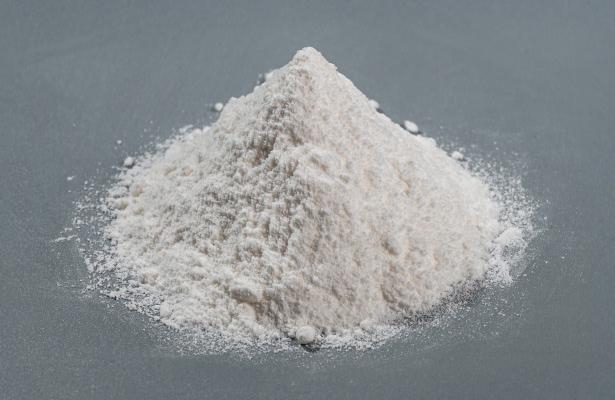
Key Benefits & Why Formulators Choose NBE STARCEL™ Silicified Microcrystalline Cellulose (SMCC)

Enhanced Flowability:
The colloidal SiO2 coating reduces inter-particle friction and cohesion, delivering better flow than standard MCC — especially critical for sticky or cohesive APIs.

Superior Compactibility:
SMCC demonstrates higher tensile strength tablets at equivalent compression forces compared to plain MCC, enabling harder tablets or reduced tablet weight.

Improved Lubrication Sensitivity:
SMCC maintains compactibility even in the presence of magnesium stearate, overcoming one of the biggest challenges in direct compression formulation.

Moisture Buffering:
The silicon dioxide component reduces moisture sensitivity, making SMCC ideal for moisture-sensitive active pharmaceutical ingredients.

Better API Distribution:
The uniform particle structure of SMCC promotes even API distribution throughout the tablet matrix.

Single-Step Advantage:
Replaces separate MCC + glidant additions, simplifying the formulation and reducing the number of excipients.
| Parameters | U.S.P. – N.F. |
|---|---|
| Identification A, B, C, D | Complies |
| Degree of Polymerization | NMT 350 |
| pH | 5.0-7.5 |
| Conductivity, µS / cm, not exceed than water by | 75 |
| Water Soluble Substance | NMT 0.24 |
| Ether Soluble Substance | NMT 0.05 |
| Heavy Metals % | NMT 0.001 |
| Residue on Ignitation % W/W | 1.8-2.2 |
| Loss on drying, % | NMT 6 |
| Microbiology Limits | |
| Total Aerobic Microbial Count, cfu/g | NMT 100 # |
| Total Yeast And Mold Count, cfu/g | NMT 10 # |
| Pseudomonas Aeruginosa | Absent in 1g Sample |
| Escherichia Coli | Absent in 1g Sample |
| Staphylococcus Aureus | Absent in 1g Sample |
| Salmonella Species | Absent in a 10g Sample |
* SMCC 90 LM
| Type | Size |
|---|---|
| HDPE Bags | 25 Kg |
| HDPE Bags | 20 Kg |
| Paper Bags | 25 Kg |
| Paper Bags | 20 Kg |
| FIBC | 400 Kg |
| Container | Palletized | Non-Palletized |
|---|---|---|
| 20 Ft. (Approx Wt.) | 10,000 Kg | 12,000 Kg |
| 40 Ft. (Approx Wt.) | 20,000 Kg | 24,000 Kg |
Frequently Asked Questions
What is silicified microcrystalline cellulose (SMCC)?
Silicified Microcrystalline Cellulose (SMCC) is a co-processed excipient made from approximately 98% MCC and 2% colloidal silicon dioxide. The two components are intimately mixed during manufacture, resulting in a material with the compactibility of MCC and the flowability advantages of a glidant — in a single excipient.
How is SMCC different from a physical mixture of MCC and silicon dioxide?
SMCC is produced by co-processing MCC and colloidal SiO2 during manufacture, creating a uniform, intimate mixture at the particle level. A simple physical blend of MCC and SiO2 does not achieve this level of integration, resulting in inferior and inconsistent performance. SMCC’s co-processed structure ensures consistent performance batch after batch.
When should I use SMCC instead of standard MCC?
SMCC is the preferred choice when: (1) your API has poor flow properties; (2) your formulation is sensitive to lubricant over-blending; (3) you need higher tablet tensile strength; or (4) your API is moisture-sensitive and standard MCC moisture levels cause stability concerns.
