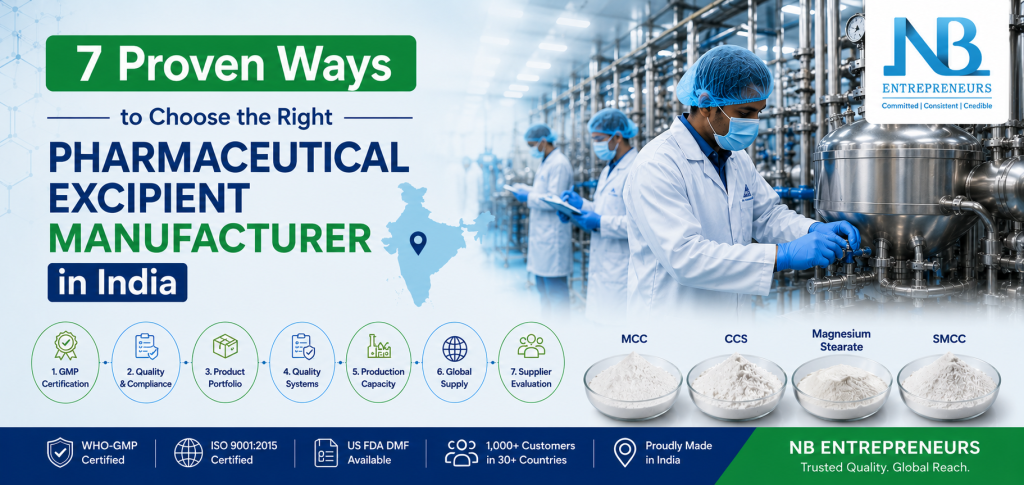
7 Proven Ways to Choose the Right Pharmaceutical Excipient Manufacturer in India
Choosing a pharmaceutical excipient manufacturer in India is one of the most significant choices that a formulation or procurement team can make. Inactive ingredients (excipients) of a drug product directly affect bioavailability, stability, compressibility and ultimately patient safety. Today, India exports medicines to more than 200 countries and has thousands of WHO-GMP-certified facilities, making the selection more strategic and complicated than ever. This guide identifies and summarises the seven most important regulatory science, supply chain resilience and quality systems criteria that will enable procurement managers and formulators to make informed decisions.
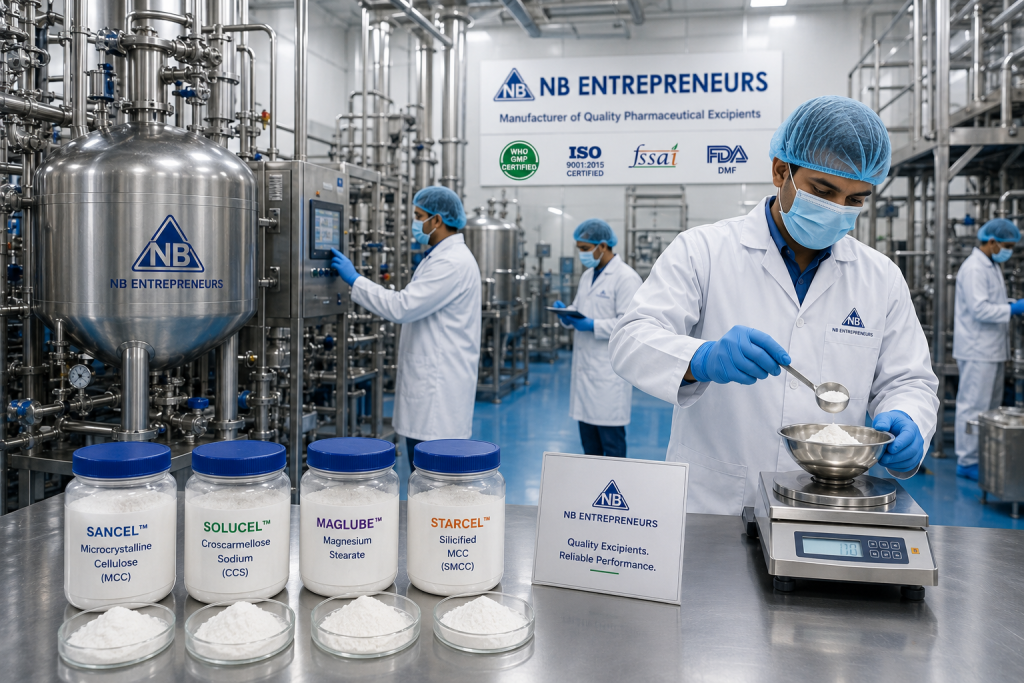
The Indian pharmaceutical excipient manufacturing industry has expanded in parallel with its large exports of generic drugs and contributes about 20% of the world’s total export of pharmaceutical excipients by volume. The Indian manufacturers now provide excipients that conform to USP, EP, BP, IP and JP specifications ranging from microcrystalline cellulose (MCC) to magnesium stearate, croscarmellose sodium and silicified MCC. Companies in India, including NB Entrepreneurs, established in 1976 in Nagpur, Maharashtra, have been pioneers in this growth and have been supplying specialised excipient grades like SANCEL™ MCC, MAGLUBE™ Magnesium Stearate, SOLUCEL™ Croscarmellose Sodium and STARCEL™ Silicified MCC to 1,000+ customers in 30+ countries.
1. Verify GMP Certification and Regulatory Compliance
One of the most important factors for any pharmaceutical excipient manufacturing company in India is the Good Manufacturing Practice (GMP) certification. As per WHO Guidelines on GMP for Pharmaceutical Excipients, GMP means that the manufacturing of each batch of excipient is carried out under controlled, documented and reproducible conditions. There are high risks for excipients for the markets which are regulated like the UK, US, EU, Canada, etc., where it may be necessary for the manufacturers to demonstrate compliance with USFDA cGMP regulations (21 CFR Parts 210/211) or EU GMP Annex.

WHO GMP-certified pharmaceutical excipient manufacturing facility in IndiaWhile verifying a prospective supplier, ask for the recent GMP inspection reports, certificates of compatibility and any warning letters or import alerts from regulatory agencies. Be careful with the scope of the certificate. It should clearly specify the excipient grades you are planning to use. A manufacturer could have a WHO-GMP certificate for one line of products, but not for the other. Pharmaceutical manufacturing in India is under the regulation of the Central Drugs Standard Control Organisation (CDSCO), and its approved manufacturing lists are a good resource that verifies that the products are approved by the government.
2. Evaluate Pharmacopeial Compliance Across USP, EP, BP, and IP Standards
An Indian pharmaceutical excipient manufacturer needs to have a technical capability to supply the excipients that meet the standards set by the pharmacopoeia of the country or countries you would like to sell these excipients to. All United States Pharmacopoeia (USP-NF) European Pharmacopoeia (Ph.) requirements are met. Any global excipient supplier should have the expectation for the following three baselines: European Pharmacopoeia (Eur.), British Pharmacopoeia (BP), and Indian Pharmacopoeia (IP). The ICH Quality Guidelines (Q1–Q14) elaborate on concepts of stability, impurity profiling and standards for pharmaceutical development, which are underlying principles for excipient specifications.

Ask for at least three recent production lots for each excipient grade. These are – Certificate of Analysis (CoA). The CoA must list test method references (such as USP <429>, <616> for particle size; <281> for residue on ignition), acceptance criteria and the actual test results. Ensure that a qualified person or QC manager has signed the CoA. Also ensure it contains the batch number, manufacturing date, expiry or retest date. Parameters of paramount importance for MCC are particle size distribution, bulk/tapped density, loss on drying (LOD), pH and degree of polymerisation.
3. Assess the Manufacturer’s Product Portfolio and Grade Versatility
An ideal pharmaceutical excipient manufacturer in India will have a wide range of different pharmaceutical excipients, not just commodity grades of one excipient. The different dosage forms (immediate release tablets, modified release, orally disintegrating tablets, direct compression and wet granulation) demand access to a variety of excipient grades with unique and specific physicochemical properties. It is easier to qualify suppliers, diminish regulatory burden and streamline the supply chain by sourcing from a single technically competent partner.
NB Entrepreneurs Excipient Portfolio — Grade Comparison
| Brand Name | Active Ingredient | Key Application | Grade | Pharmacopeia |
| SANCEL™ PH 101 | Microcrystalline Cellulose | Wet Granulation, Binder | Standard | USP / EP / BP / IP |
| SANCEL™ PH 102 | Microcrystalline Cellulose | Direct Compression, Filler | Standard | USP / EP / BP / IP |
| SANCEL™ PH 200 | Microcrystalline Cellulose | High-Speed DC, Large Tablets | Premium | USP / EP / BP / IP |
| STARCEL™ SMCC 50 | Silicified MCC | Improved Flow, DC Pharma | Speciality | USP / EP |
| STARCEL™ SMCC 90 | Silicified MCC | Enhanced Compressibility | Speciality | USP / EP |
| MAGLUBE™ | Magnesium Stearate | Tablet Lubricant | Standard | USP / EP / BP / IP |
| SOLUCEL™ | Croscarmellose Sodium | Super-Disintegrant | Functional | USP / EP / BP / IP |
4. Scrutinise Quality Management Systems and Documentation Rigour
In the context of a reliable pharmaceutical excipient manufacturer in India, robust quality systems form the backbone. A manufacturer’s day-to-day Quality Management System (QMS) is what ultimately helps ensure the consistency and traceability of each shipment you receive, in addition to their having a GMP certificate. Assess their in-process controls, deviations management, change control and out-of-specification (OOS) investigation capabilities. An ISO 9001:2015-certified manufacturer with corrective and preventive action (CAPA) processes will provide the assurance of process stability so that procurement managers can rely on them for contracts for many years.
As a part of the supplier qualification process, ask the following: Master Batch Record (MBR) format, Certificate of Analysis (CoA) template, analytical method validation reports, stability study data and a summary of their Pharmaceutical Quality System (PQS) in line with ICH Q10. The ability to provide translated documents, regulatory dossier support (DMF/EDMF) and audit readiness are key factors for manufacturers that are exporting. For all branded excipients, NB Entrepreneurs have comprehensive technical dossiers which enable regulatory submissions in the US, EU and other ICH member territories.
5. Analyse Supply Chain Resilience and Production Capacity
It is even more important to source from a pharmaceutical excipient manufacturer with proven supply chain resilience in the post-COVID pharmaceutical landscape, where supply disruptions have necessitated a change in the strategy to maintain safety stocks and dual-source critical excipients for formulators. Assess the manufacturers’ upstream raw material sourcing, especially the source of alpha-cellulose pulp; production capacity and utilisation; and warehouse facilities. The risk proposition from a manufacturer who can process 5,000+ MT/year of MCC, has dedicated silos, controls the humidity in the silos and has an ERP system in place for inventory management is very different from that of the small-scale producer.
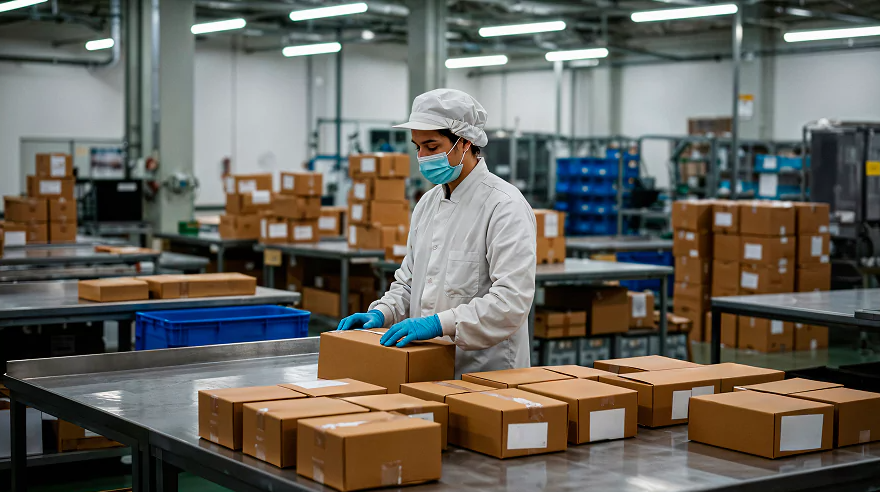
Logistics infrastructure is also important to foreigners. Does the manufacturer have an export department to deal with export paperwork, Certificates of Origin, fumigation certificates, and phytosanitary requirements? Are they already connected with freight forwarders to ship by sea, air and multi-modal? Based in the geographic centre point of India (Nagpur), NB Entrepreneurs has consistently exported products to customers all over Asia, Europe, the Americas and Africa and maintains a 1,000+ customer base and an on-time delivery record of 95%.
6. Compare India vs. China vs. Europe as Excipient Sourcing Origins
A resilient excipient supply approach typically involves cross-checking different geographies. A structured comparison is needed to understand the benefits and drawbacks of sourcing from a pharmaceutical excipient manufacturer in India as compared to sourcing from a Chinese or European supplier. India’s 60.32 billion USD pharmaceutical manufacturing industry has come a long way, with a large pool of technically qualified professionals, the availability of English-language documentation and regulatory transparency enabling it to stand out.
| Criteria | 🇮🇳 India | 🇨🇳 China | 🇩🇪🇳🇱 Europe |
|---|---|---|---|
| US FDA DMF availability | High — standard | Limited | High |
| Multi-pharmacopoeia compliance (USP+BP+EP+IP) | Standard offering | Partial only | Standard |
| Open customer audit access | Open & standard | Frequently restricted | Open |
| English documentation | Full — all docs | Partial, translation needed | Full |
| Price per kg (bulk MCC) | Competitive | Lowest | Premium (+60–80%) |
| Supply chain transparency | High | Variable | High |
| Technical support & formulation guidance | Strong | Limited | Strong |
| Regulated market overall suitability | Excellent | Moderate | Excellent |
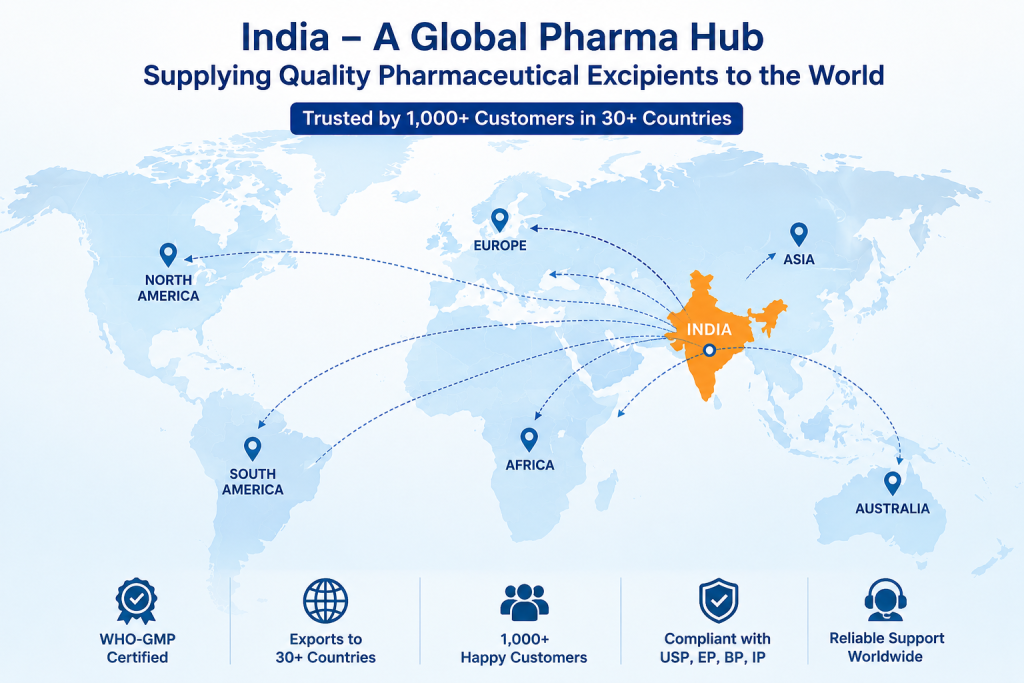
“India has more US FDA-approved pharmaceutical manufacturing facilities outside the United States than any other country in the world — and Indian excipient manufacturers are built to serve that ecosystem.”
– NB Entrepreneurs Quality Assurance Team, Nagpur
7. Conduct Structured Supplier Evaluation Using a Formal Questionnaire
The ultimate (and most actionable) decision in choosing a pharmaceutical excipient manufacturer in India is a formal supplier evaluation. This is more than just documents being collected. It is an evaluation of the manufacturer’s skills, culture, and future partnership. Please organise a Supplier Qualification Questionnaire (SQQ) that includes technical, regulatory, commercial, and ESG aspects for procurement and QA teams to deploy.
Why NB Entrepreneurs are the Most Trusted Pharmaceutical Excipient Manufacturer in India?
49 years of continuous production of cellulose at our GMP-certified unit in Nagpur, Maharashtra, makes NB Entrepreneurs one of the oldest pharmaceutical excipient manufacturers in India since 1976. All products provided by NB Entrepreneurs are certified to WHO-GMP, ISO 9001:2015, US FDA DMF, USP-NF, BP, IP and IPEC-GMP standards: SANCEL™ Microcrystalline Cellulose (MCC), MAGLUBE™ Magnesium Stearate and SOLUCEL™ Croscarmellose Sodium are certified as excipients; STARCEL™ Silicified MCC is certified as a co-processed excipient.

We have served 1,000+ pharmaceutical companies in over 30 countries, including top Indian companies such as Cipla, Sun Pharma, Mankind, Ajanta Pharma and Glenmark. Each batch we ship comes with a complete documentation package: batch-specific CoA, TDS, stability data, BSE/TSE statement, and allergen declaration, all included and ready for your regulatory submission file.
Choosing a pharmaceutical excipient manufacturer in India is a complex process that involves various factors related to quality science, regulatory considerations, commercial viability, and supply chain sustainability. The seven criteria detailed in this guide are replicable GMP criteria, Pharmacopeial compliance, Product portfolio versatility, Quality documentation rigour, Supply chain robustness, Cross-origin benchmarking, and Structured supplier evaluation offer a replicable framework that can be used by any procurement or formulation team.
Frequently Asked Questions on the Best Pharmaceutical Excipient Manufacturer in India
Q1. What is the standard grade for each excipient, and can multi-batch COAs be provided?
Confirm USP/EP/BP for each grade. Minimum number of batch CoAs: 3 consecutive batch CoAs for statistical confidence.
Q2. Are there any USFDA, MHRA or TGA inspections within the past 3 years? What were the results?
The most objective measurement of GMP culture is the results of inspection by a third party. Inspection reports are public records in many jurisdictions.
Q3. What is your actual capacity utilisation rate and what would be your contingency in case of a force majeure?
A manufacturing plant that is producing more than 85% of its capacity and has no backups is a supply risk. Request a Business Continuity Plan (BCP).
Q4.Do you have Drug Master Files (DMFs/EDMFs) for your excipient grades and for whom?
Availability of DMF/EDMF makes it easier for drug manufacturers to submit their regulatory applications. Check that the DMF is not under review hold and is active.
Q5. What is your raw material sourcing, process input and packaging material change control policy?
The main reason for batch-to-batch variation is unannounced process changes. Your formulation’s performance consistency is safeguarded by a strong change control policy.
Q6. Do you have stability data (accelerated & long-term) for each excipient grade when stored following ICH Q1A conditions?
Stability data is used to support the assignment of shelf life in drug product dossiers. The data should be requested under 40°C/75% RH (accelerated) and 25°C/60% RH (long-term).
| Work with India’s Most Trusted Pharmaceutical Excipient Manufacturer NB Entrepreneurs supplies SANCEL™ MCC, MAGLUBE™ Magnesium Stearate, SOLUCEL™ CCS, and STARCEL™ SMCC — with complete regulatory documentation, free R&D samples, and a 5-day QTA turnaround. Request Free Sample or Quote Trusted by 1,000+ pharma companies in 30+ countries since 1976. Become a Patner |


0 comments
No approved comments found.