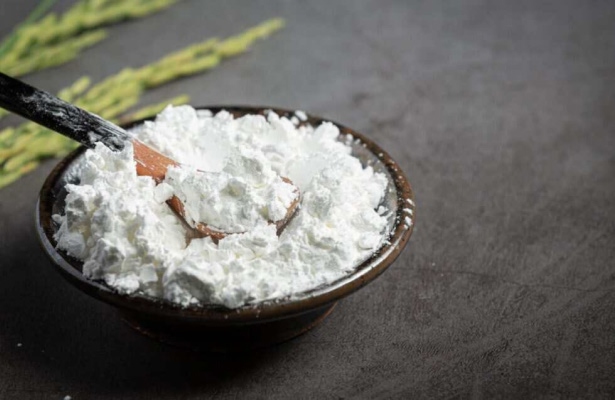
Key Benefits & Why Formulators Choose NBE Powdered Cellulose

Chemically Inert:
Non-reactive with APIs, ensuring formulation stability and long shelf life.

Excellent Water Absorption:
High water-holding capacity improves dough texture in food applications and wicking in tablet formulations.

Dietary Fibre Function:
In food and nutraceuticals, Powdered Cellulose provides insoluble dietary fibre without caloric contribution.

Anti-Caking Performance:
Its fibrous structure prevents agglomeration in powdered food and supplement products.

Good Compressibility:
Suitable as a diluent in direct compression and wet granulation tablet formulations.

Natural Origin:
Plant-derived, non-GMO, suitable for clean-label formulations.
| Parameters | U.S.P. – N.F. |
|---|---|
| Description | A White or almost White, fine or granular powder, Odorless |
| Identification A, B, C | COMPLIES |
| Conductivity, μS/cm | NMT Water by 75 |
| pH | 5.0 – 7.5 |
| Heavy Metals, PPM | NMT 10 |
| Loss on drying, % | NMT 6.5 |
| Residue on Ignition, % | NMT 0.3 |
| Water Soluble Substances % | NMT 1.5 |
| Ether Soluble Substances % | NMT 0.15 |
| Bulk density, g/ml | 0.25 to 0.45 |
| Microbiology Limits | |
| Total Aerobic Microbial Count, cfu/g | NMT 1000 |
| Total Yeast And Mold Count, cfu/g | NMT 100 |
| Escherichia Coli | Absent in 1g Sample |
| Salmonella Species | Absent in a 10g Sample |
| Pseudomonas Aeruginos | Absent in 1g Sample |
| Staphylococcus Aureus | Absent in 1g Sample |
| Type | Size |
|---|---|
| HDPE Bags | 25 Kg |
| HDPE Bags | 20 Kg |
| Paper Bags | 25 Kg |
| Paper Bags | 20 Kg |
| FIBC | 400 Kg |
| Container | Palletized | Non-Palletized |
|---|---|---|
| 20 Ft. (Approx Wt.) | 10,000 Kg | 12,000 Kg |
| 40 Ft. (Approx Wt.) | 20,000 Kg | 24,000 Kg |
Frequently Asked Questions
What is the difference between Powdered Cellulose and Microcrystalline Cellulose?
Powdered Cellulose consists of longer, fibrous cellulose particles that are mechanically disintegrated but not chemically depolymerised. MCC is partially depolymerised, resulting in shorter, more crystalline particles with superior compactibility and binding properties. MCC is generally preferred for tablet compression due to its better mechanical properties; Powdered Cellulose is more commonly used as a diluent, anti-caking agent, and dietary fibre source.
Is Powdered Cellulose safe for food use?
Yes. Powdered Cellulose is approved as a food additive by major food safety authorities worldwide, including the FDA (21 CFR 182.90), the European Food Safety Authority (E460i), and the FSSAI in India. It is used globally in food products as an anti-caking agent, bulking agent, and dietary fibre source.
